
The Measurement Cartel
Google, Meta, and the agencies that buy your media all report against the same comfortable number. It isn't even the industry's first one, and Nielsen going private in 2022 shows exactly who has the most to lose if it changes.
I don't trust a green dashboard the way I used to. Not because the numbers are wrong. Because of who needed them to say exactly what they say.
Last quarter I sat in a media review. Every number on the slide was green: seventy-two percent viewability, reach on target, CPM (the price per thousand impressions) inside budget.
Nobody in the room seemed sure any of it meant a customer had noticed the campaign. Not even the person presenting it. Nobody said so out loud.
That feeling isn't cynicism. It's an accurate read of how the number got made.
This is one gear inside what I've called The Perception Engine. It's the machine inside a company that decides what gets planned, measured, and rewarded. Whether the customer noticed anything is beside the point. Here's the gear, and the names behind it.
"Viewable" means one second
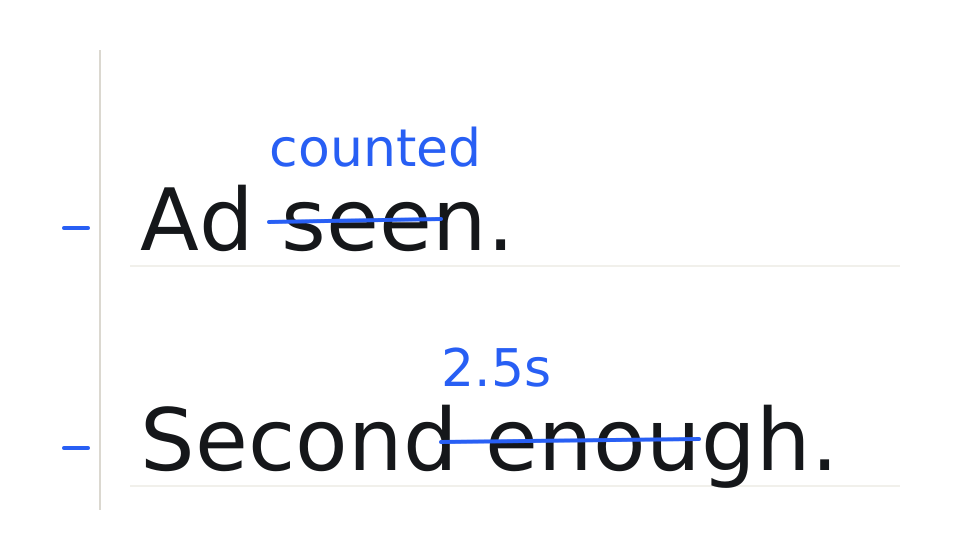
A digital ad counts as "viewable" under the industry's own standard at fifty percent of its pixels on screen, for one continuous second. Karen Nelson-Field studies ad attention directly, at her firm Amplified Intelligence. Her real threshold for attention encoding sits closer to two and a half seconds. Roughly eighty-five percent of digital ad exposures never clear it.
Google and Meta sell the impression. The one-second bar lets each of them count more of its own inventory as delivered.
GroupM, Omnicom, and Publicis place most of the industry's media. They report against that same bar too, because it's the one the whole trading system runs on.
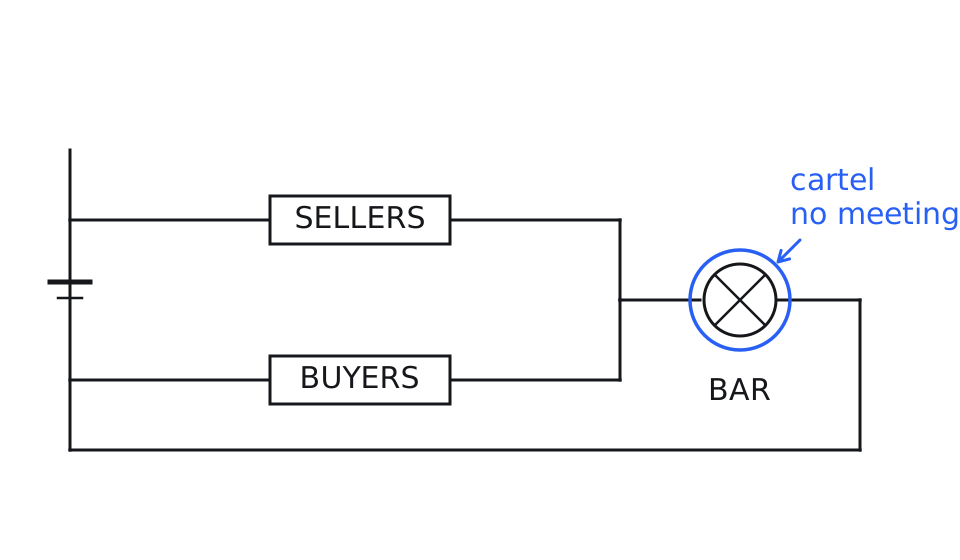
Nobody in that chain had to conspire. Three companies keeping one comfortable number produces a cartel's effect without a single meeting.
This isn't even advertising's first comfortable number. Television found one decades earlier.
By the 1950s, TV ad spending was exploding. Buyers needed one number to compare a prime-time spot on one network against a drive-time radio buy on another. Nobody agrees on who coined the term.
Nielsen built the ratings business that still runs on it today: the Gross Rating Point, one rating point multiplied by how many times the ad aired. GRP counts how much exposure got bought. It has never once counted whether anyone watched it.
The industry has solved this before
You'd think an industry sitting on two comfortable numbers would have fixed at least one of them by now. It has tried. Twice.
In 1914, newspaper publishers self-reported their own circulation. Advertisers had no way to check whether the figure on the rate card was real. So advertisers, ad agencies, and publishers jointly founded the Audit Bureau of Circulations. Auditors inspected paid-circulation records in person, then called subscribers at home to confirm they'd paid for the paper.
"ABC audited" became a claim publishers wanted attached to their name. What ABC verified was a fact: how many papers actually sold, a number with one true answer nobody's opinion could move.
The same shape returned in broadcast. Congress opened hearings into inflated ratings in 1963. Rather than face regulation, broadcasters and advertising trade groups built a body of their own.
It was later renamed the Media Rating Council. It's the body that still accredits Nielsen's ratings today, and the one that set the viewability bar I opened with.
In November 2025, that same council published something new: Attention Measurement Guidelines, through the Interactive Advertising Bureau. A more honest number, years in the making. The guidelines call attention complementary. Not a replacement. CPM and impressions keep the seat at the table where money changes hands.
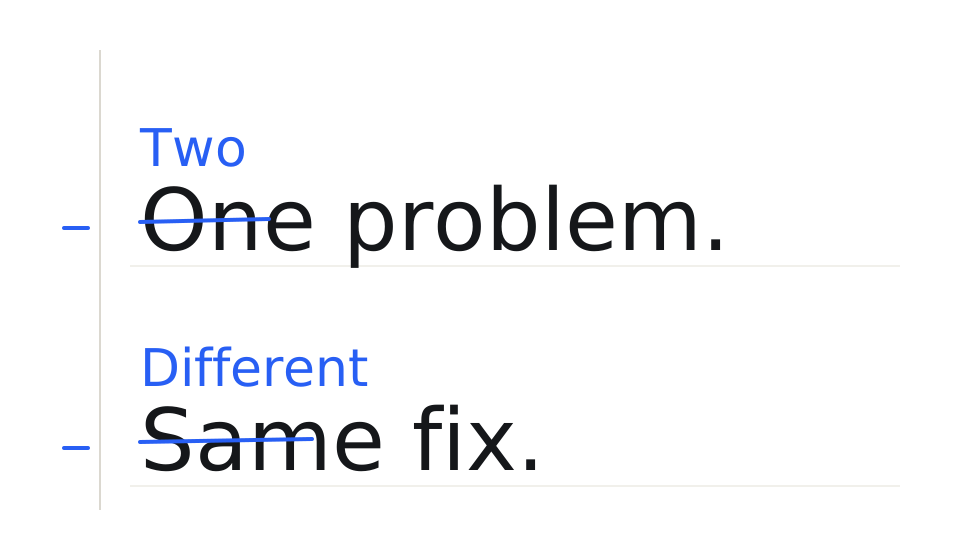
Verifying a fact and retiring a currency turn out to be different problems. The first only needs someone willing to count. The second needs someone willing to give up the number their own revenue is priced on.
There's a reason no outside referee has done the second job instead. Verifying what actually happened requires the platform's own delivery data. Any credible auditor needs the platform's cooperation.
In practice, that means its funding, and a seat on its board. The council doing the counting is built from exactly the people who would have to change it.
Nielsen shows what the currency costs to keep
Nielsen makes the same point sharper, because Nielsen let the industry see the price tag once.
Its national ratings panel sits at around forty-two thousand households. Those are the meters. They help decide how much of a TV or streaming budget goes where. Forty-two thousand homes, each wired with a box. That box sets a currency the industry negotiates tens of billions of dollars a year against.
Faster, more accurate rivals, VideoAmp, iSpot, and Comscore among them, have been ready for years. Adoption has stayed limited to side-by-side tests, not to the number the money actually moves on.
One TV network executive told Digiday in 2022: "The currency thing, it's kind of just hit a wall." Nielsen went private that same year and stopped publishing what any of it earns. The last figure it ever had to say out loud, in 2021, was three and a half billion dollars a year.
Once you're the currency, nobody outside the industry gets to ask what it's worth. Nobody inside it has a reason to make you.
What to check on your own next report
Here's what that gives you to do with your own next report, this week. Don't ask whether the numbers are accurate. They usually are, reported precisely, exactly as designed.
Ask a narrower question. On this report, which number is the one you're paid, bonused, or renewed on? That one is the currency.
Then go find the other one: an attention score, a brand-lift study, an outcome-based number, whatever nobody's bonus depends on defending. That second number usually carries the real signal.
This changes how you personally read the next report. It doesn't change what gets reported upward, or what you get paid on. Not by itself.
Whichever report lands on your desk next, ask who built the number on it. Ask what they would lose if it moved. History says an honest answer already exists twice, in two different media. Both times, the old number kept the money.
~ Charles